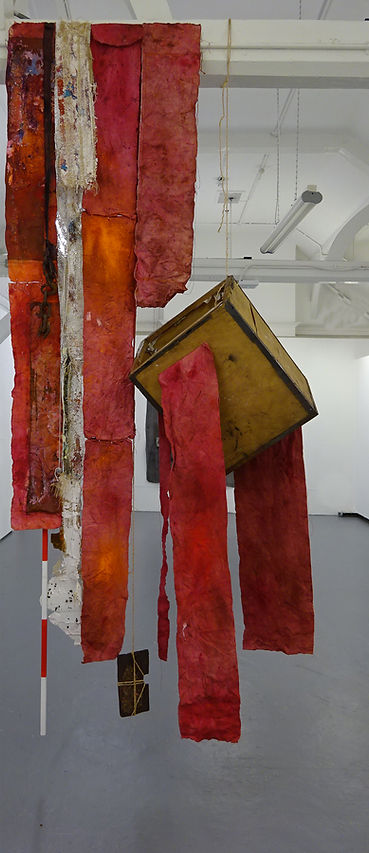
Anamnesis means remembrance or reminiscence, the collection and recollection of what has been lost, forgotten, or effaced. It is, therefore, a matter of the very old, of what has made us who we are. But anamnesis is also a work that transforms its subject, always producing something new (Harman, G, 2011).
My fascination with the ephemeral and with decay arises from the tension between the familiar and the strange, between a fleeting present and deep time. Ruins expose, with clarity and severity, the temporary nature of human constructions—mere surface interventions destined to be reclaimed by the earth. Temporality, as revealed through ruin, allows us to observe human presence indirectly, much like archaeology examines life through its remnants. Both art and archaeology are physical acts, grounding us in our material engagement with the world. In this sense, anamnesis unfolds through painting, entropy, and archaeological processes.
The archaeological imaginary in my practice privileges haptic experience over purely visual perception. It urges a tactile engagement—scraping, uncovering, and negotiating surfaces—rather than passive observation. This approach foregrounds our bodily connection to a material world composed, like ourselves, of matter in constant transformation.
Within the installation, paintings and ceramic works are arranged on the floor, evoking an archaeological excavation. Layers of marks and gestures accumulate, moving from translucent washes to dense impasto surfaces. Found objects function as traces of exploration, reinforcing the parallel between artist and archaeologist. The installation also challenges the bidimensionality of painting, questioning where painting ends and objecthood begins. Ultimately, the project activates past ruins as a means to generate collective awareness within the present.

Anamnesis, 2020, Installation
Material; spotlight, Paintings, wood pallets, casting moulds, Rusty metals, sculptures, canvas stretcher, bucket with clay, plaster bandages).
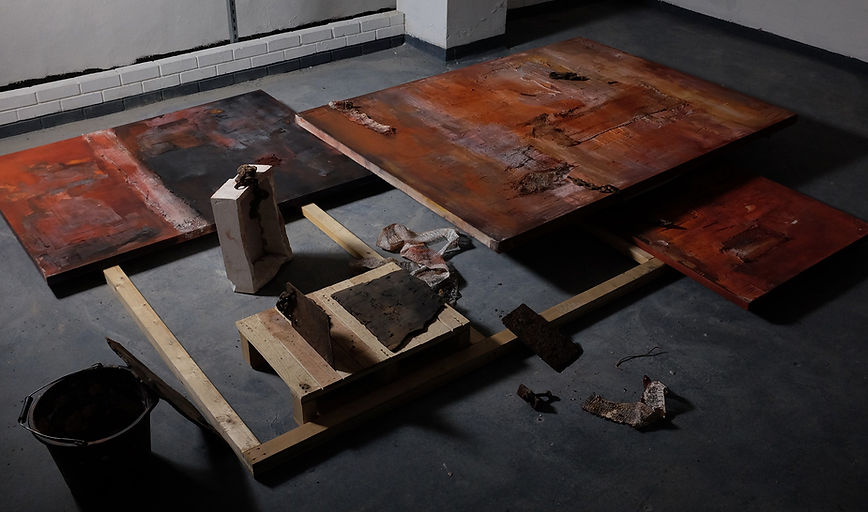
Anamnesis, 2020, Installation
Material; spotlight, Paintings, wood pallets, casting moulds, Rusty metals, sculptures, canvas stretcher, bucket with clay, plaster bandages).
Suspiria de Profundi project

Suspiria de Profundi ( 2021 ) - Assemblage Element, Camberwell College of Art
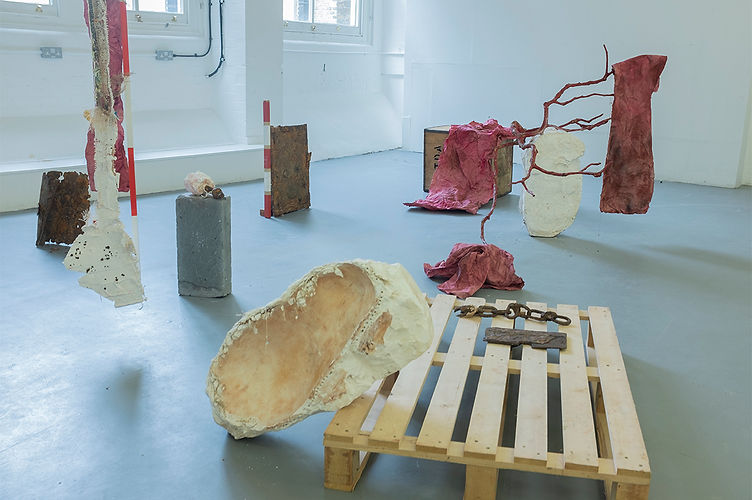

Suspiria de Profundi ( 2021 ) - Assemblage Element, Camberwell College of Art
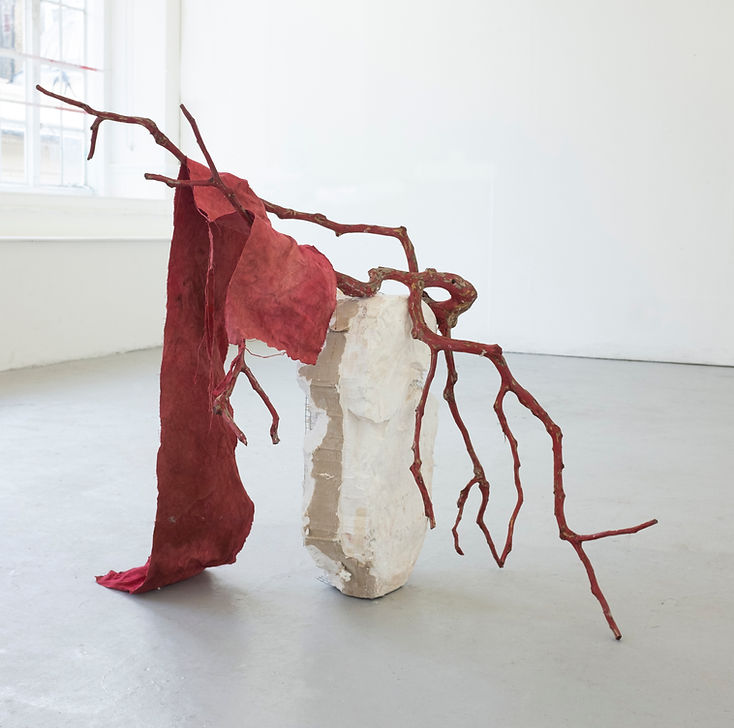
Suspiria de Profundi ( 2021 ) - Assemblage Element, Camberwell College of Art

Suspiria de Profundi ( 2021 ) - Assemblage Element, Camberwell College of Art
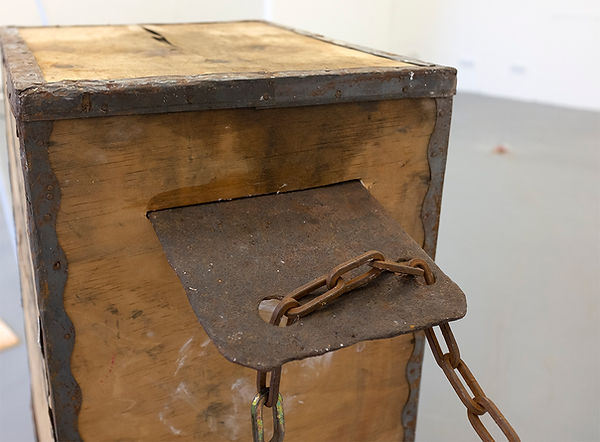
Suspiria de Profundis is the result of an extensive and dynamic expansion of my artistic practice throughout the year. The project acts as a blueprint for deep material investigation, informed by theories surrounding the material turn and a challenge to Cartesian thinking.

Suspiria de Profundi 2021 - Project Space
Upon entering the space, viewers encounter an assemblage of constructed and found objects: some suspended from the ceiling, others attached to walls extending onto the floor, and others placed directly within the space. Materials include plaster casts, wooden boxes and pallets, rusty iron plates and chains, remnants from previous works, red and purple canvas strips, and wooden measuring sticks.

Suspiria de Profundi 2021 - Project Space
My practice operates within an expanded field between painting and sculpture, engaging with materials beyond medium specificity. It focuses on the inherent qualities of materials and the affective responses they generate. Found objects are used much like pigments in painting, becoming primary elements in the composition.
My research draws on Object-Oriented Ontology, challenging the idea that objects withdraw from human perception and instead opening space for poetic and sensory engagement. This approach contributes to broader reflections on our condition and our place within the environment. Phenomenological notions of the “flesh” (Ponty, 1968) emphasize the body's immersion in the world, suggesting that perception and existence are inseparable.
Suspiria de Profundi, proj 02